

Why transferability, technical data and sovereignty are becoming part of capability - and what the Gripen E-Embraer programme shows about designing for strategic mobility.
By Johanna Green - Founder & CEO, Disrupt Synergies
Since the Sweden-US Technology Prosperity Deal was signed on 22 May, I have taken part in roundtable discussions and defence-industrial forums linked to the Munich Security Conference, NATO Allies in Ankara, the American Chamber of Commerce, and the FKG Defence-Automotive pop-up, to name a few. Another important milestone took place yesterday 15 October, further sharpening my view of where the agreement’s implementation challenges and opportunities are beginning to emerge.
One argument raised repeatedly is that today’s defence-trade architecture was designed for a less distributed and less deeply interconnected technological ecosystem than the one allied industry operates in today.
Today, the industrial reality is different.
Sweden, Finland and other allied countries increasingly bring advanced technologies, engineering capabilities and production know-how of their own into collaborative defence ecosystems.
How do we protect sensitive technology?
The question is increasingly also:
How do trusted allies make strategically valuable technology transferable, integrable and sustainable across borders without compromising the reasons those controls exist in the first place?
During the discussion, GlobalEye was raised as a possible test case for a more multilateral approach. Other models of allied cooperation were discussed too, including AUKUS and NATO mechanisms for multinational acquisition and support.
But the most revealing question was not whether another framework could be imagined.
It was much more practical:
Who would actually make it work?
Political alignment can open the door
Five months earlier, Swedish Foreign Minister Maria Malmer Stenergard and US Secretary of State Marco Rubio had signed the Sweden–US Technology Prosperity Deal in Helsingborg.
Its stated purpose includes “unlock industrial competitiveness.” It calls for the development and diffusion of “trusted technology stacks”, including measures aimed at exports and adoption in “third party countries.” In defence innovation specifically, Sweden and the United States intend to establish dialogue around technology transfer and “reducing regulatory friction where possible.”
The agreement covers fields far beyond traditional defence: AI, connectivity, quantum technology, energy, advanced manufacturing, space and defence innovation. Sweden describes it as creating opportunities for improved access to cutting-edge technology, greater market penetration and closer cooperation with business.
Sweden is also explicit about what the agreement does not do.
It creates no legal or financial commitments. It is a political declaration of intent.
Political alignment can open the door. It does not automatically move the technology through it.
Pillars 5 and 6: where cooperation becomes executable
For industrial boards, two parts of the agreement deserve particular attention: Pillar 5, Strengthening Space Collaboration, and Pillar 6, Advancing Defense Innovation.
Pillar 5: Strengthening Space Collaboration
reaches beyond research into space security, exploration, technology R&D and commercialisation. It calls for cooperation between US and Swedish commercial actors and for regulatory burdens on commercial space activity to be addressed as technology, business models and market demands evolve.
Pillar 6: Advancing Defense Innovation
moves closer to the central question of this article. It calls for dialogue on regulatory and policy matters affecting defence technology cooperation, including technology transfer and reducing regulatory friction where possible, to strengthen transatlantic defence-industrial collaboration.
Read together, they suggest where implementation pressure is likely to surface: What information can be shared? Which technical data can move? Who can modify the technology? Where can it be produced? Can another partner or customer be added without rebuilding the permission structure?
Transferability is increasingly determined before there is anything to transfer.
For industrial boards, that changes the investment case. Regulatory architecture is no longer simply something to examine once a product is ready for export. It can influence which technologies, partnerships and production capabilities become strategically scalable in the first place.
The cost of discovering permission too late
A technology can be technically mature, commercially attractive and politically supported while still depending on a separate architecture of permissions.
Who can receive the technical data? Who may modify the software? Can production be duplicated in another country? Can a third-country partner receive what it needs to integrate the technology? Who owns upgrades? Can the customer maintain the capability independently? What happens when a European system contains US-origin technology several layers down the supply chain?
These questions are easy to place in a legal or compliance box.
Increasingly, they are questions of industrial strategy.
Companies already understand technical debt: decisions made early in a technology or software architecture may appear harmless at the time but become increasingly expensive to correct later.
Strategic technology can accumulate its own form of permission debt.
I call it permission debt: the accumulation of transfer, technical-data, software, ownership and sovereignty constraints that become expensive - or strategically limiting - because they were not designed into a capability early enough.
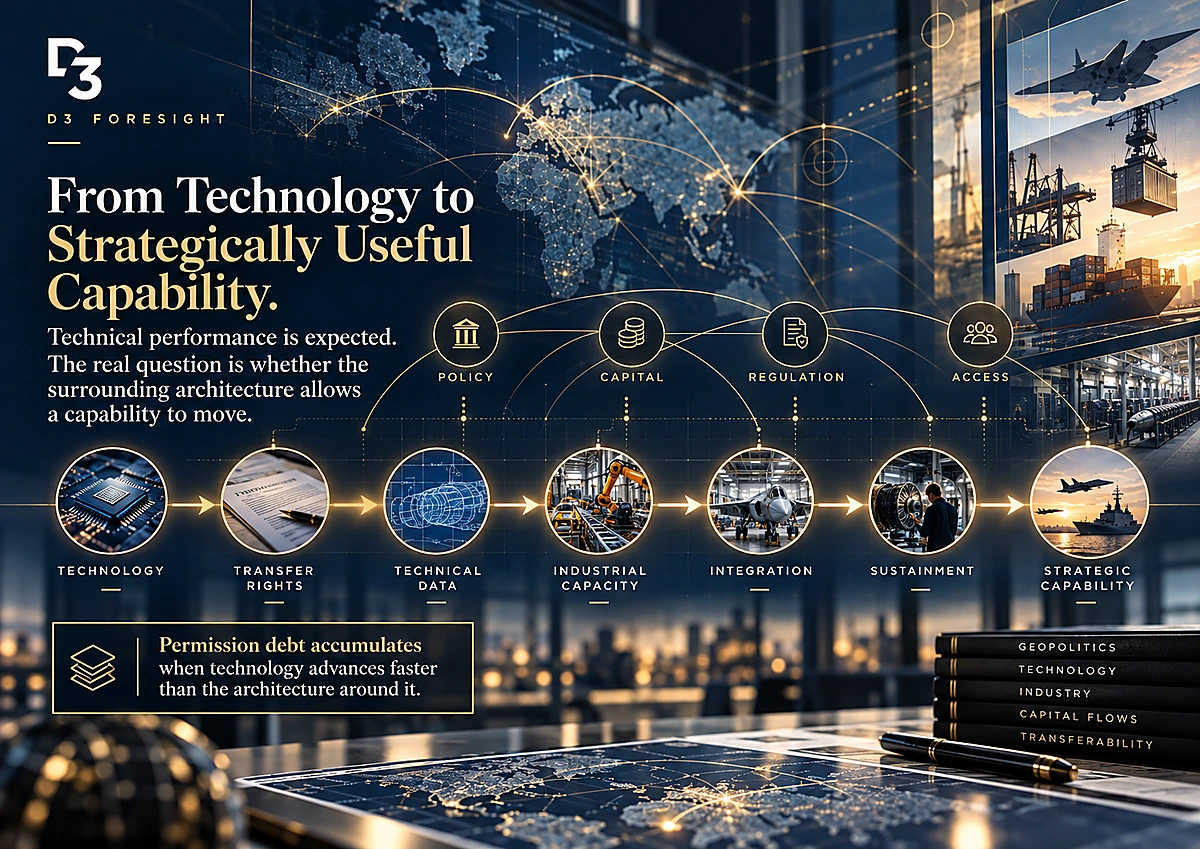
Figure 1: From Technology to Strategically Useful Capability
Permission debt does not necessarily mean that something cannot be done.
It means recognising that an otherwise attractive opportunity can require additional approvals, a redesigned supply chain, new intellectual-property arrangements, alternative components, local production or another commercial structure before it can be deployed.
When transfer is designed into the capability
Saab’s Gripen programme in Brazil shows what deliberate transfer architecture can look like.
On 6 October 2026, the first Gripen E produced outside Sweden completed its maiden flight from Embraer’s Gavião Peixoto facility in Brazil. Saab described the flight as another milestone in the programme’s technology-transfer plan. It was flown by Saab chief test pilot Jakob Högberg, while Embraer flight engineers handled flight planning and execution with Saab support.
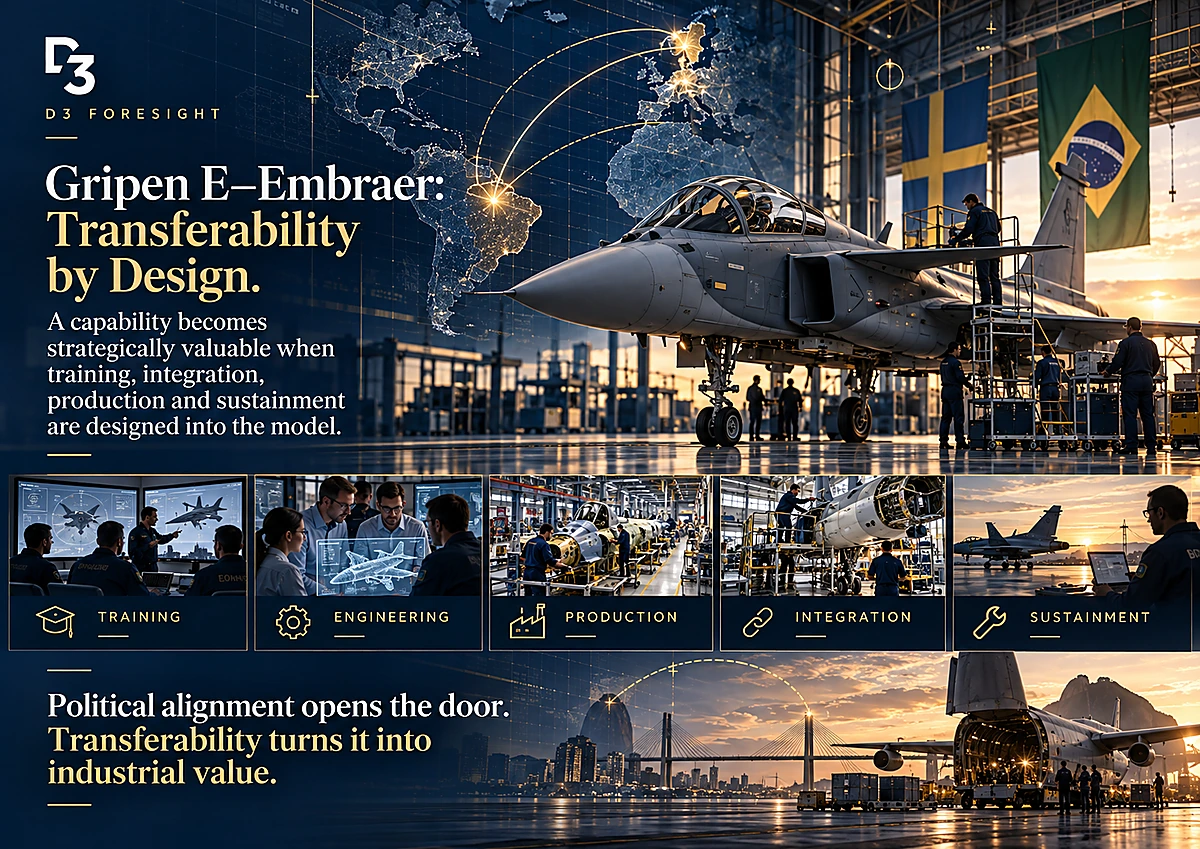
Figure 2: Gripen E-Embraer: Transferability by Design
The importance of the programme goes beyond exporting an aircraft.
The Brazilian Gripen programme has deliberately included engineering knowledge, production capability, training, integration, final assembly and sustainment.
More than 350 Brazilian engineers, technicians and pilots have participated in training related to development, production, flight testing and maintenance.
Saab’s earlier programme documentation describes technology transfer divided across theoretical training, research and technology projects, on-the-job training, development and production. Embraer has taken responsibility across systems development, integration, flight testing and final assembly.
Gripen is not a template for every industrial opportunity.
Transferability can be designed deliberately.
Knowledge, production, sustainment, data, training and industrial responsibility can form part of the capability architecture rather than being treated as an administrative issue after the commercial decision has already been made.
Saab did not simply export a product. It transferred elements of the capability required to produce, develop and sustain it.
The same logic now applies far beyond fighter aircraft.
Now imagine you are not Saab
Most industrial companies will never negotiate an international programme on the scale of Gripen.
They may manufacture advanced polymers. Precision-machined components. Sensors. Power electronics. Industrial automation. Communications equipment. Software embedded inside production systems.
Their technology may be highly relevant to defence, energy, critical infrastructure or resilience without the company having been built for any of those markets.
Imagine that one such Swedish company receives serious interest from a defence customer or prime contractor.
The company has the production capability. Its technology performs. Management can see the commercial opportunity.
Then the questions begin.
Does the product contain US-origin technology? Can the drawings be shared with the intended customer? Can the software be modified locally? Can manufacturing be duplicated in another country? Can an integration partner receive the technical data it requires? Who owns the right to update the technology? Can the customer maintain it without returning the system to the original supplier? Would replacing one component alter the regulatory or qualification position of the wider system? Who carries the cost if the supply chain has to be redesigned?
These questions can determine whether an opportunity is viable, scalable, financeable and strategically useful.
A CEO may see a new market. A CTO may see a technically straightforward adaptation. A CFO may see an attractive return on investment.
Yet all three can be looking at different versions of the same opportunity if nobody has mapped the architecture connecting technology, rights, supply chain, regulation and customer access.
What geopolitical muscle looks like on the factory floor
The World Economic Forum, IMD and BCG have increasingly used the term “geopolitical muscle” to describe the capabilities, expertise, processes and tools companies need to translate geopolitical developments into business decisions.
For industrial companies, that muscle now has to reach far beyond country-risk monitoring.
It needs to answer questions such as: What does a change in export-control policy mean for a product roadmap? What happens to a capital investment if a strategically important component can no longer be sourced from the intended jurisdiction? Does a new alliance relationship create an opportunity to manufacture locally? Do new sovereignty requirements improve or weaken the investment case? Can the company redesign a capability before a regulatory change becomes a commercial constraint?
The practical question is no longer simply:
Can we build it?
It is:
Can we build it, qualify it, transfer it, integrate it, sustain it and commercialise it in the ecosystem where demand is emerging? Answering it early can turn regulatory complexity from a late-stage obstacle into part of the strategic design.
Autonomy without isolation
The EU is grappling with the same problem.
In June, European Commission Executive Vice-President Henna Virkkunen described the relationship directly: “geopolitics and technology are inseparable.”
Her wider argument was not for technological isolation. She connected greater European control over data and supply chains with strengthening digital autonomy and resilience while keeping Europe open to international partners.
The strategic choice is not necessarily autonomy or openness.
How do we design the conditions under which both can coexist?
Trusted cooperation requires more than trust. It requires architecture.
The adoption clock is getting shorter
The pressure is increasing because institutions around strategic technology are simultaneously trying to accelerate adoption.
NATO’s Rapid Adoption Action Plan aims, in general, to move from identification of a need to acquisition and integration of a new technological product within 24 months.
Within that objective, Allies aim to complete incremental testing, evaluation, verification, validation and integration generally within 12 months after identifying potential solutions, while reducing market research generally to around three months.
NATO explicitly highlights non-traditional suppliers, including technology companies, medium-sized enterprises and start-ups, as increasingly important sources of new technological products.
Europe is simultaneously putting more capital behind industrial capacity.
The European Commission’s 2026 work programme under the European Defence Industry Programme (EDIP) allocates €1.5 billion to strengthening and modernising Europe’s defence industry. More than €700 million is directed toward reinforcing European defence production, including targeted components and products.
And the regulatory responsibilities attached to technology are increasing as well.
Since 11 September 2026, manufacturers of in-scope products with digital elements have been subject to the Cyber Resilience Act (CRA)'s reporting obligations for actively exploited vulnerabilities and severe security incidents. An early warning may be required within 24 hours, followed by the main notification within 72 hours. The CRA’s broader obligations become fully applicable in December 2027.
These measures arise from different policy systems and address different problems.
But together they amplify the pressure in the same direction:
The adoption clock is getting shorter. The permission architecture is not automatically getting simpler.
Strategic technology is being asked to deploy faster, through more complex ecosystems, while carrying more obligations with it.
Transferability can therefore no longer be treated as something to examine after the technology has been developed and the customer has appeared.
It belongs in the architecture of the opportunity itself.
Seven questions before committing capital
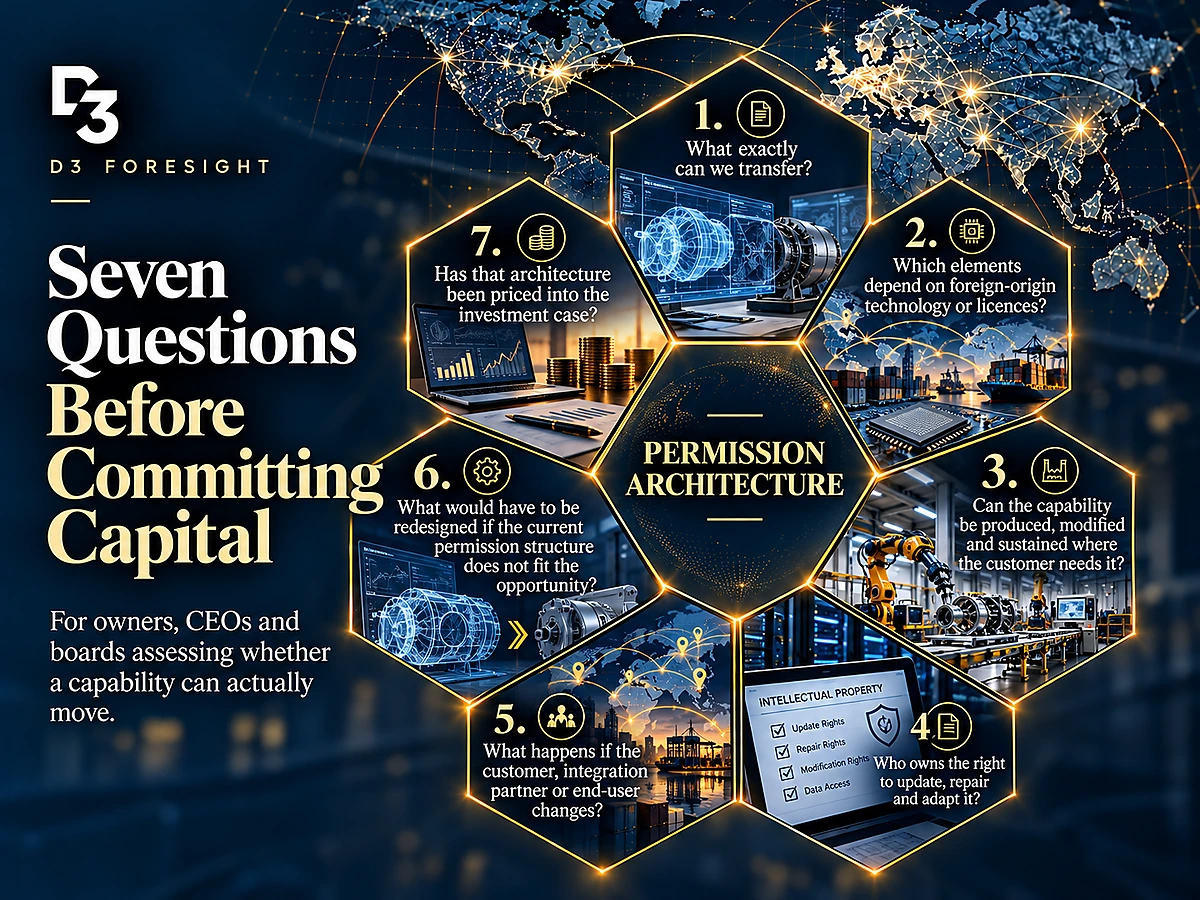
Figure 3: Permission Architecture: Seven Questions Before Committing Capital
1. What exactly can we transfer? Not only the finished product, but drawings, technical data, software, manufacturing know-how, maintenance information and integration knowledge.
2. Which elements depend on foreign-origin technology or licences? One critical component can change the architecture of the wider opportunity.
3. Can the capability be produced, modified and sustained where the customer needs it? If not, what needs to change?
4. Who owns the right to update, repair and adapt it? Strategic customers increasingly care about sustainment and sovereignty alongside acquisition.
5. What happens if the customer, integration partner or end-user changes? Third-party transfer questions can emerge long after the original commercial decision.
6. What would have to be redesigned if the current permission structure does not fit the opportunity? Supply chain, software, IP arrangements, production location and qualification can all become relevant.
7. Has that architecture been priced into the investment case? Approvals, redesign, local production, new suppliers and qualification consume time and capital.
“The purpose is not to turn every industrial board into an export-control department. It is to stop evaluating strategic opportunities on market size and technical relevance alone. A capability may be highly relevant and still carry substantial permission debt. That debt can materially alter whether the opportunity creates value - or merely consumes capital and management attention.”
From technological capability to strategically mobile capability
Europe’s industrial challenge is not only to develop more technology.
It is also to ensure that strategically important technology can be qualified, transferred, integrated, produced, modified and sustained across the trusted ecosystems where demand is emerging.
That requires more than technical excellence.
It requires alignment between regulation, data rights, ownership, production, software, supply chains, capital and sovereignty.
This is why technology sovereignty should not be reduced to a choice between building everything domestically and remaining completely open.
How do we build strategically mobile capability inside trusted ecosystems?
That means protecting what needs to be protected while designing for transferability, interoperability and industrial optionality so allied capabilities can scale when strategic demand changes.
For industrial companies, the implication is simple.
Do not wait until the customer appears to discover whether the capability can move.
Understand the architecture earlier.
At D3, we treat capability, access, regulation and commercial architecture as one system. Technical performance is expected. The decisive question is whether the surrounding architecture allows technology to become strategically useful.
“Political alignment opens the door. The money flows through it. Transferability decides who can move fast enough to capture the opportunity.”
— Johanna Green, Founder & CEO, Disrupt Synergies
Johanna Green
Johanna Green is Founder & CEO of Disrupt Synergies, an independent strategic intelligence firm focused on industrial capability, strategic access and emerging markets. Her work examines where structural change creates new strategic value - and where relevant capabilities already exist before markets fully recognise them.
Sources
Sweden–US Technology Prosperity Deal - The White House
Sweden and United States agree bilateral technology cooperation - Government of Sweden
NATO Rapid Adoption Action Plan
EDIP Work Programme 2026 - European Commission
Cyber Resilience Act(CRA) reporting obligations - European Commission
First Gripen E produced in Brazil makes maiden flight - Saab